
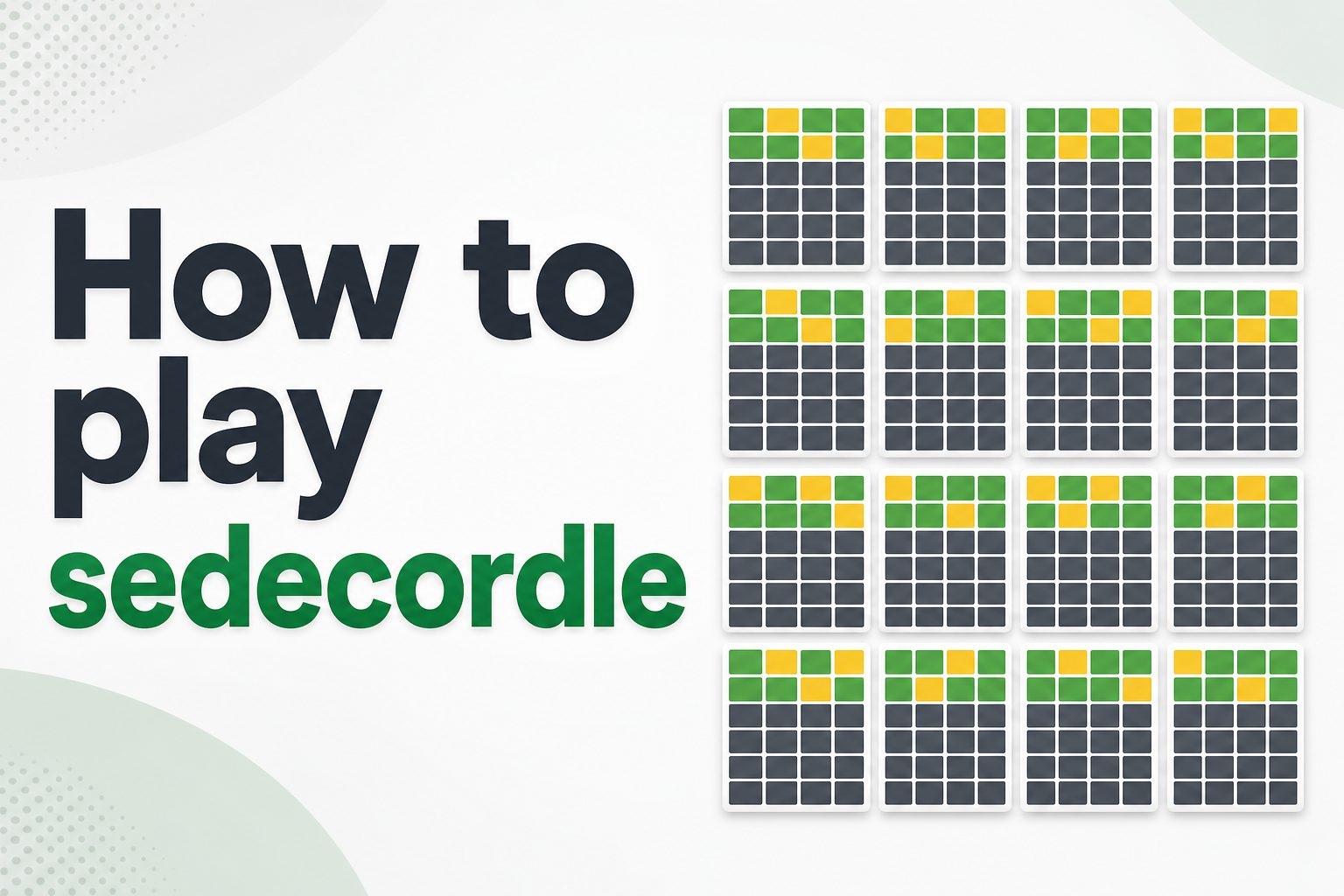
How to play sedecordle is a common question for word puzzle fans who enjoy Wordle-style games but want a much bigger challenge. Sedecordle asks you to solve sixteen hidden five-letter words at the same time, using shared guesses across every board. That sounds intense at first, but the game becomes much easier once you understand how the clues work and how to manage your guesses.
The main appeal of Sedecordle is that it rewards both vocabulary and strategy. You are not just guessing one word; you are reading patterns across sixteen puzzles, deciding which boards need attention, and using every attempt carefully. A good player thinks about letters, positions, remaining options, and risk all at once.
This guide explains the rules, the best starting approach, practical examples, common mistakes, and expert tips for improving your Sedecordle results. By the end, you will know how to play confidently, avoid wasted guesses, and build a repeatable solving method.
Sedecordle is a word puzzle where the goal is to solve sixteen five-letter words within a limited number of guesses. Each guess is entered once, but it applies to all sixteen boards at the same time.
After every guess, each board gives color feedback. A green letter is correct and in the right position. A yellow letter is in the word but in a different position. A gray letter is not in that board’s answer.
The key difference from simpler word games is scale. In Wordle, one guess affects one puzzle. In Sedecordle, one guess creates clues across sixteen puzzles, so the screen can feel busy until you learn to scan it calmly.
Sedecordle matters because it teaches efficient deduction. You must balance exploration with solving. Early guesses should reveal common letters, while later guesses should lock in specific boards that already have strong clues.
The game is best approached as a process, not as sixteen separate puzzles. When you use each guess to gather broad information, then narrow your focus board by board, Sedecordle becomes challenging but manageable.
How Does Sedecordle Work?
1. The Sixteen Boards Share Every Guess
When you type a five-letter word in Sedecordle, that same guess is tested against all sixteen hidden answers. This shared-guess system is the heart of the game. It means one word can solve one board, partially help several others, and give no useful clues on a few boards at the same time.
2. Color Clues Must Be Read Separately
Even though one guess applies everywhere, the feedback is different on every board. A letter can be green on one board, yellow on another, and gray on a third. This is why players must avoid assuming that a gray letter is useless everywhere unless they check each puzzle’s individual feedback.
3. The Guess Limit Creates The Challenge
Sedecordle usually gives more guesses than Wordle, but sixteen words still leave little room for careless play. If you spend too many attempts testing random words, you may run out before finishing the last few boards. A strong strategy uses early guesses for coverage and later guesses for targeted solving.
4. Solved Words Stay Visible
Once you solve a board, it remains visible so you can move attention to the remaining unsolved puzzles. This helps reduce mental load. Instead of trying to remember all sixteen answers, you can gradually narrow your focus and spend more time on the boards that still have unclear patterns.
5. Common Letters Are Especially Valuable
Letters such as E, A, R, S, T, L, N, and O often appear in five-letter English words, so they are useful in opening guesses. The goal is not always to solve immediately. Early value often comes from learning which common letters appear and where they might fit.
6. Board Management Matters As Much As Vocabulary
A large vocabulary helps, but Sedecordle also rewards organization. Good players constantly decide which board is closest to being solved, which board needs more letter discovery, and which board can wait. This management skill prevents tunnel vision and keeps the full puzzle under control.
What Is The Best Sedecordle Starting Strategy?
1. Begin with two or three strong five-letter words that cover common letters without repeating too many characters.
2. Avoid guessing rare words too early unless the clues clearly point in that direction.
3. Scan all sixteen boards after each guess instead of focusing only on the board with the most green letters.
4. Use early turns to discover vowels because vowel placement often unlocks difficult boards.
5. Start solving individual boards only after you have enough information to make a confident guess.
Key Sedecordle Benefits For Puzzle Players
- Better Pattern Recognition: Sedecordle trains you to notice letter positions, repeated structures, and missing possibilities across many boards at once.
- Stronger Vocabulary: Because you see many five-letter patterns in a single round, you naturally become more familiar with common word endings, vowel layouts, and consonant combinations.
- Sharper Decision Making: The limited guess count forces you to decide whether a word is worth testing or whether another board deserves attention first.
- Improved Focus: Managing sixteen boards requires calm scanning and steady thinking, which makes the game a useful exercise in concentration.
- More Replay Value: Sedecordle feels fresh because each daily puzzle creates many small solving paths instead of one simple answer.
- Greater Satisfaction: Finishing all sixteen words feels rewarding because the result depends on both logic and persistence.
How Can You Improve At Sedecordle?
1. Use Balanced Opening Words
Choose opening words that include common vowels and consonants while avoiding too much letter repetition. Words with varied letters give broader information across all sixteen boards. The first few guesses should build a useful clue map, not chase one answer too aggressively.
2. Track Confirmed Green Letters First
Green letters are the most reliable clues because they show the exact position of a letter. When a board has two or three greens, it often becomes easier to solve than a board with several scattered yellow letters. Prioritizing strong green patterns helps you finish boards efficiently.
3. Treat Yellow Letters Carefully
Yellow letters are helpful, but they can mislead you if you place them too quickly. A yellow letter only tells you where the letter does not belong. Test it against the remaining open positions and consider common word structures before committing to a guess.
4. Do Not Ignore Difficult Boards
It is tempting to solve the easiest boards first, but completely ignoring difficult boards can create trouble later. Check low-information boards after every few guesses. Sometimes one broad exploratory word can reveal enough clues to make several stubborn puzzles much easier.
5. Save Guesses With Shared Value
Before entering a word, ask how many boards it helps. A guess that could solve one board and test useful letters on three others is stronger than a guess that only helps one narrow situation. Shared value is one of the biggest differences between Sedecordle and smaller word games.
6. Learn Common Five-Letter Patterns
Many answers follow familiar patterns such as consonant blends, double letters, common endings, and vowel-consonant-vowel structures. The more you recognize these shapes, the faster you can move from clues to likely answers. Pattern memory reduces random guessing and improves late-game accuracy.
7. Review Mistakes After Each Game
After finishing or losing a round, look at where guesses were wasted. Maybe you focused too long on one board, ignored a repeated letter, or used a word with poor coverage. Short reviews help turn each game into practice instead of just another attempt.
Sedecordle is challenging because it turns one word puzzle into sixteen connected puzzles. The best way to play is to use broad opening guesses, read each board separately, and shift from discovery to solving at the right time.
Players improve fastest when they manage the whole grid, respect the clue colors, and avoid wasting guesses on low-value words. A calm process matters more than lucky guessing.
Once you understand how to play sedecordle with structure, the game becomes less overwhelming and much more enjoyable. Each round becomes a test of logic, patience, vocabulary, and smart decision making.
FAQs About How To Play Sedecordle
Is Sedecordle Harder Than Wordle?
Yes, Sedecordle is harder than Wordle because you must solve sixteen words instead of one. However, you also receive more guesses and much more feedback. Once you learn to use shared guesses wisely, the difficulty becomes more strategic than confusing.
How Many Words Do You Solve In Sedecordle?
In Sedecordle, you solve sixteen five-letter words in one game. Every guess applies to all sixteen boards at the same time, so each word you enter can provide clues for many answers at once.
What Is A Good First Guess In Sedecordle?
A good first guess uses common letters and avoids unnecessary repeats. The best starting word is not always the same for every player, but strong openers usually include useful vowels and frequent consonants that reveal information across many boards.
Should I Solve Easy Boards First?
Solving easy boards first can be smart, especially when you are confident. Still, you should not ignore harder boards for too long. The best approach is to finish obvious answers while continuing to gather clues for the boards with less information.
Can Beginners Play Sedecordle?
Beginners can play Sedecordle, but it helps to start slowly and focus on the clue system. New players should practice reading green, yellow, and gray feedback across multiple boards before worrying about speed or perfect scores.
How Do I Stop Running Out Of Guesses?
To stop running out of guesses, avoid random words and choose guesses that help several boards at once. Use early turns for letter coverage, then switch to targeted solving when enough clues appear. Reviewing missed games also helps identify wasted attempts.